
What is a DME Provider? How to become a DME Provider.
Learn what a DME provider is and how they supply essential medical equipment for maintaining health and independence at home.
Published on nobledirect.com
Five posts are live on nobledirect.com today. Below them sits a dated snapshot of the LinkedIn page, and four posts drafted for review and not published anywhere. Every item on this page says where it came from.
Live on nobledirect.com. Real title, real date, real excerpt, and the card links to the post.
Read off the public company page on 27 July 2026. Post text was not publicly retrievable.
Written for this proposal and not published. Shown in a dashed outline so it cannot be mistaken for the rest.

Published on nobledirect.com
Learn how Client-Server vs Web-based DME Software impacts your workflow and decision-making processes as a healthcare provider.
Read on nobledirect.comEverything below is live on nobledirect.com. Titles, dates and summaries are the published ones.
Learn what a DME provider is and how they supply essential medical equipment for maintaining health and independence at home.
Published on nobledirect.com

Addressing DME billing challenges is crucial for efficiency. Learn how to identify and solve these common issues.
Published on nobledirect.com

Transform the DME documentation process. Achieve a paperless environment that enhances efficiency and compliance with one solution.
Published on nobledirect.com
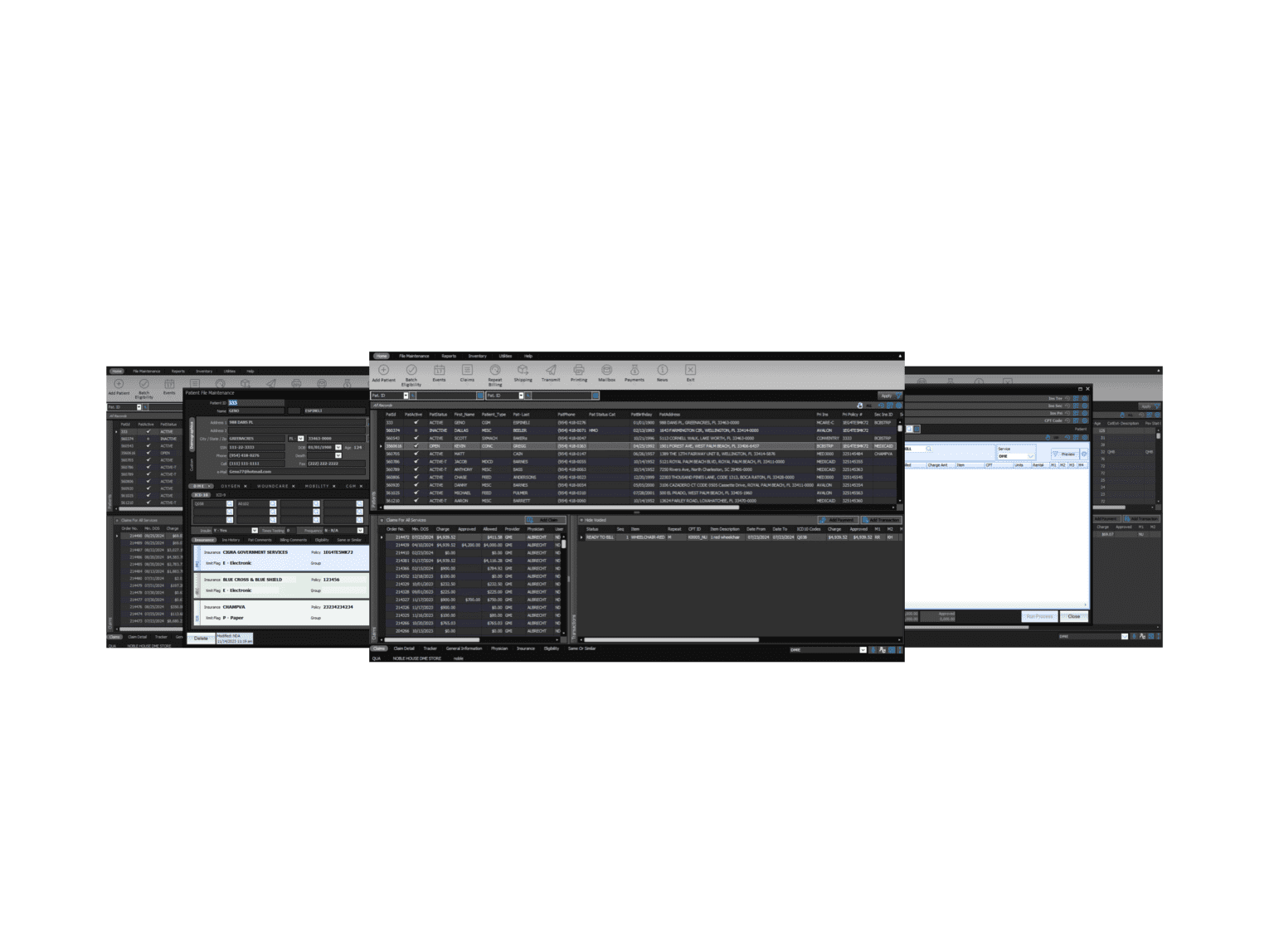
Find out why the best DME software is essential for modern healthcare providers to create a unique patient experience.
Published on nobledirect.com
This group is a dated snapshot, not a live feed. The company overview is public, so the tagline and the details below are verbatim. The posts themselves sit behind a sign-in wall, so each card below summarises a piece of public activity rather than reproducing the post.
Modern DME / HME Billing & Business Software
The company page’s recent activity references Medtrade 2026 in Phoenix, the trade show where DME and HME providers meet suppliers and software vendors in person.
Summary written for this page, not the post’s own words. [TK - paste verbatim post text]
The company page’s recent activity references an expansion into Puerto Rico.
Summary written for this page, not the post’s own words. [TK - paste verbatim post text]
The four below are unpublished drafts, written for this proposal. None of them is on nobledirect.com, none of them has been reviewed by Noble House, and none of them should be treated as approved copy.
Sourcing is marked honestly. The CMS rule is a published federal requirement and is stated flatly. The staffing and denial figures come from secondary industry write-ups, one of which is a competitor, so they are attributed loosely and carry a TK until someone confirms a primary source.
The CMS Interoperability and Prior Authorization Final Rule has been operational since 1 January 2026. Impacted payers now have to decide a standard prior authorization request within seven calendar days, an expedited one within 72 hours, and give a specific reason for every denial. The deadlines will get the attention. The reason is the part worth planning for. A specific denial reason only helps you if it lands against the claim and shows up in the same screen where your team works the AR. If it arrives as a PDF in a portal somebody has to remember to check, the rule has changed the payer’s obligation and not your day.
Source: CMS Interoperability and Prior Authorization Final Rule (CMS-0057-F), operational 1 January 2026.
Industry reporting on medical group practices puts the number at 92% who have hired or reassigned staff purely to keep up with prior authorization volume, and 60% who say at least three employees touch a single request. Read that as a payroll figure rather than a workflow complaint. Three people on one request usually means three systems, and the handoffs between them are where the request sits still. Adding automation on top of the tabs does not close that gap. One screen does: eligibility, the same-or-similar check and the order in the same place, so the person who starts a request can finish it.
Industry reporting on prior authorization staffing burden. [TK - confirm source before publishing]
Industry reporting puts DME denial rates in the 15 to 25 percent range, with Medicare Advantage and commercial DME denials averaging roughly 12 to 15 percent through 2025. Very little of that is decided at the moment of submission. It is decided at intake, when a policy number is keyed wrong, a physician’s enrollment status is stale, or a same-or-similar item is already on file and nobody checked. Automation pointed at a bad record produces the same denial faster. Validation belongs where the record is created, which is the least interesting place to put it and the only one that prevents anything.
Industry reporting on DME denial rates. [TK - confirm source before publishing]
Competitive bidding has compressed reimbursement on the categories that carry the most volume, and the margin per claim has not come back. When the revenue side of a claim is fixed by a bid, the only variable left is what it costs you to collect it. That reframes a software decision. The question stops being how long the feature list is and becomes how many people, how many screens and how many days stand between a delivered order and a posted payment.
Medicare DMEPOS Competitive Bidding Program. [TK - confirm source before publishing]
Fifteen minutes, walked through by someone who knows DME billing.